
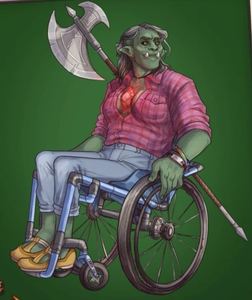
Fantasy worlds and games are common places for us to dive into escapism and play in circumstances different from our daily lives. It gives a freedom of reinvention, and boundless exploration through imagination. It provides space to relate to our identities, circumstances, or experiences in a new environment outside of the daily discrimination and barriers we face. Having a space to experience joy, freedom, and failing in safety can change fundamentally how we relate to ourselves and the world around us. There is power in being able to imagine a future of thriving, even if that is a fantasy world. By being able to think of what a thriving, inclusive world acts and feels like, we not only keep hope, but we are also able to plan steps to get there.
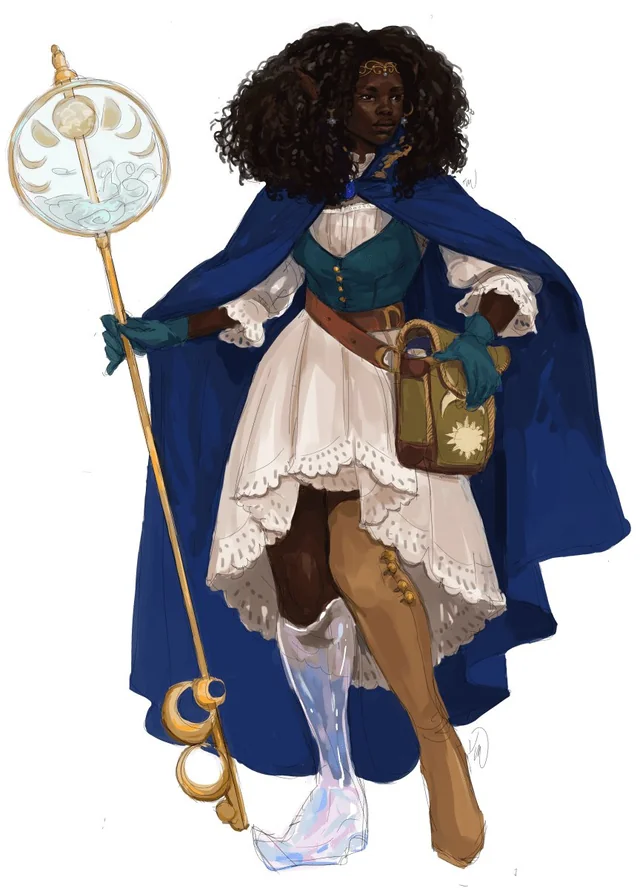
Why are some spaces lacking in their inclusivity?
Dungeons and Dragons (DND) is a fantasy tabletop role-playing game (TTRPG) that has been around since the 70’s. It involves role playing a character that has different stats, armor, and magic or fighting prowess using dice (such as the d20, a 20 sided dice) to explore fantasy quests and much more. While it has been updated and adapted during this time, it often falls short in making people feel seen or represented correctly. There is a known issue with racism in high fantasy, and DND is riddled with it. One of the most common and well known is around Orcs, from their very creation their entire race has been characterized as violent, unintelligent, and an evil corruption of the fair skinned and high society elves, as described in Tolkien’s work. They have been unplayable in DND as they are classified as monsters, but a half-orc was allowed to be a player-character.
This is finally starting to change, but the racist traits are still tied to their character stats. As the player handbook describes with wild racism and bio-essentialism “Some half-orcs rise to become proud chiefs of orc tribes, their human blood giving them an edge over their full-blooded orc rivals.” (this is a direct quote from the 5th edition players handbook). There is so much discrimination with Orcs that they have been used as racial stereotypes against Black people, Asian people, and Native American people with the focus changing based on white fear for the time period. There is so much more to say about this, and if you are looking for more information James Mendez Hodes has two well-written articles on this as a jumping off point. (https://jamesmendezhodes.com/blog/2019/1/13/orcs-britons-and-the-martial-race-myth-part-i-a-species-built-for-racial-terror)
When our game design is failing us, we turn to designing it ourselves.
Because of the discrimination, people often turn to community created content to supplement the core rules, known as homebrew content. While it doesn’t fix the original problem, it does create new structure to overwrite some of the glaring issues. This author thinks they should fix the racism in the original source material and we shouldn’t have to do a special work around. Homebrew is content you can create or find made by others that is not officially part of the rule books for DND.
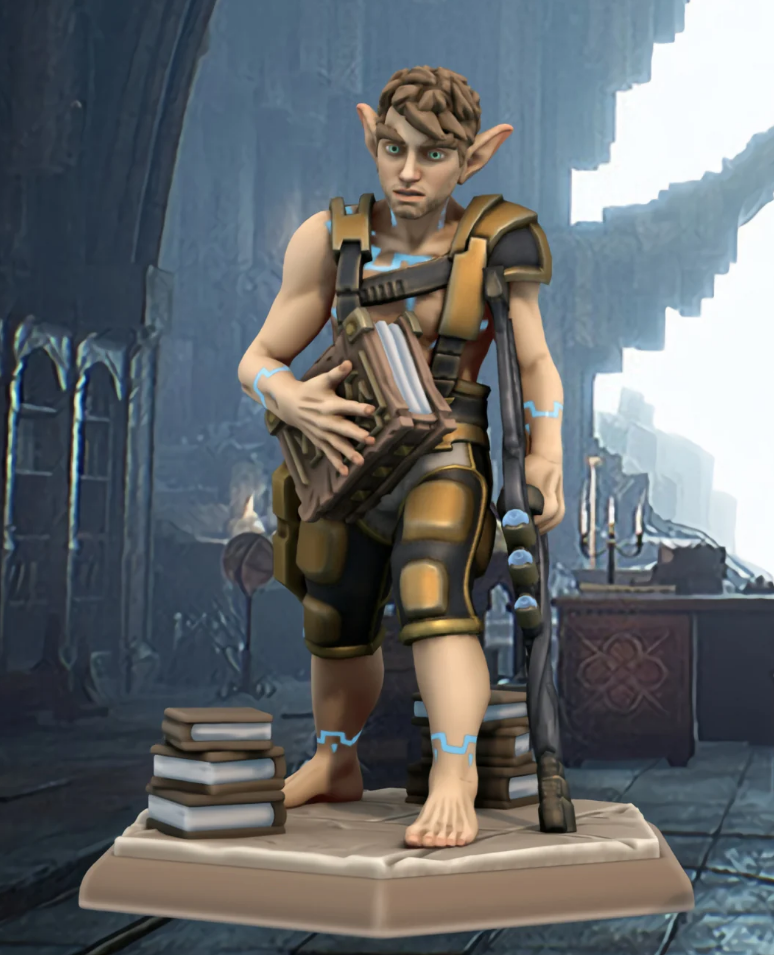
Some of the things that people find lacking in the core DND rules is any sort of functioning disability mechanic to allow players to make disabled characters. There have been lots of disability homebrew content to make disability mechanics, but often they make your disabled character functionally worse at things. There are no attached learned skills, a mobility aid has a slower movement speed than your walking companions, or all the added skills go into magic so you aren’t interacting with your disability at all anymore. These systems are not only disappointing to play, but also showcase fundamental issues in how disability is being viewed. Being disabled isn’t just being an non-disabled person who is worse at things, that shouldn’t be something I have to say, and shouldn’t be something we are still dealing with. Most disabled people don’t want magic to “cure” us, being disabled is a part of our identity we are proud of, and erasing us is getting into a eugenics storyline that we didn’t ask for. We are multifaceted, we are complex, we adapt, we hone our skills.
We build our brighter future
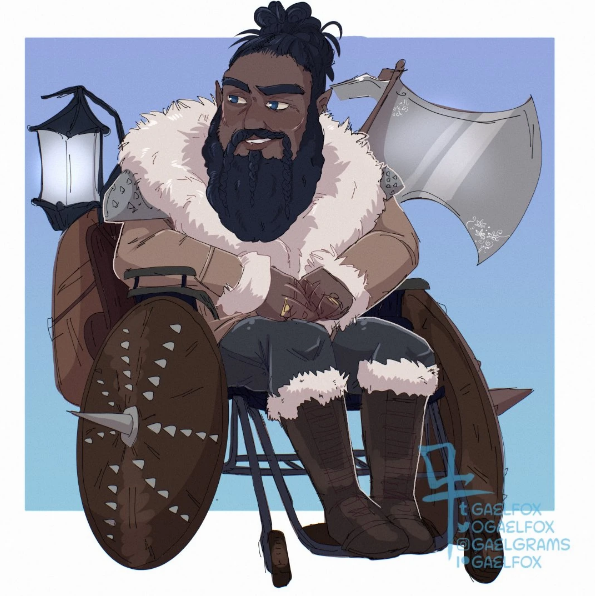
So, how do we explore disability identity in a game that doesn’t diminish us? The short answer is, with a lot of careful thought, feedback, and collaboration. There is no one perfect way to play a disabled character, or for disability mechanics to work. What might feel affirming to some disabled people may completely miss the mark for others. Many disabled people find the most accurate way is to either pick for a wide variety of options, or to make their own way if nothing pre-made feels correct. This often requires extensive thought from the player and the DM, and usually a chunk of trial and error.
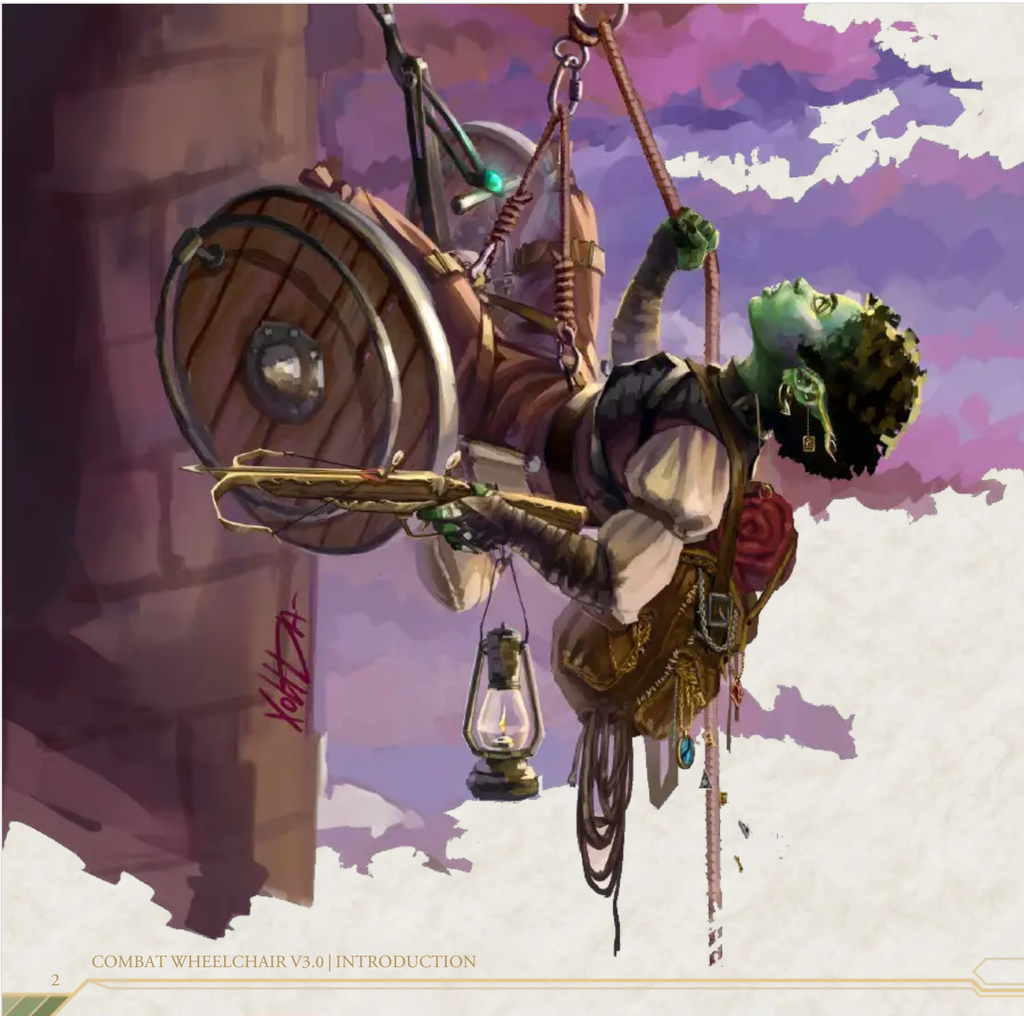
One person working on authentic representation in TTRPG spaces is Sara Thompson, who has designed, tested, and published a full combat wheelchair homebrew PDF. This allows players to design their combat wheelchair with countless features and abilities to pick from, showcasing how varied and tailored our mobility aids are, and how they often become extensions of us. Many disabled TTRPG players have used Sara’s combat wheelchair material, or their subclass extensions they include in their document, and Sara takes regular feedback to adapt and improve the combat wheelchair mechanics and offerings. Sara’s combat wheelchair designs have also appeared in popular TTRPG shows, such as Critical Role, which is one of the most popular DND live-play shows.
In the past decade, many more high profile TTRPG shows, games, and players have been interacting with and making their own disability mechanics with the help of cultural consultants. Jennifer Kretchmer is one of these disability consultants, and has worked with Dimension 20, does DMing and acting, and has created a great accessibility in gaming resource (Accessibility in Gaming Resources). Dimension 20, one of the most popular pre-recorded TTRPG shows, has been making disability mechanics for years at this point. One of the characters, Adaine Abernant, has an anxiety system and panic attack mechanic that shows up repeatedly during their campaign. There are other prominent characters and NPCs (non player characters) that are either explicitly referred to as neurodivergent or that the fans have found solidarity in their experiences and expression as a neurodivergent experience.
Many characters and NPCs are also mobility aid users, or have a described disability during their description, or a disability that they gain over the course of their adventures. One fan favorite is Lidia Barkrock, a wheelchair user and mother of an NPC (mild spoilers for Fantasy High season 2 ahead!) who is in a medically induced rage to help her fight a spirit trapped in a gem that is in her chest. This author found her storyline fascinating and loved seeing a magic chronic illness storyline with nuance, even though they wanted much more focus and depth to be poured into this part of the story.
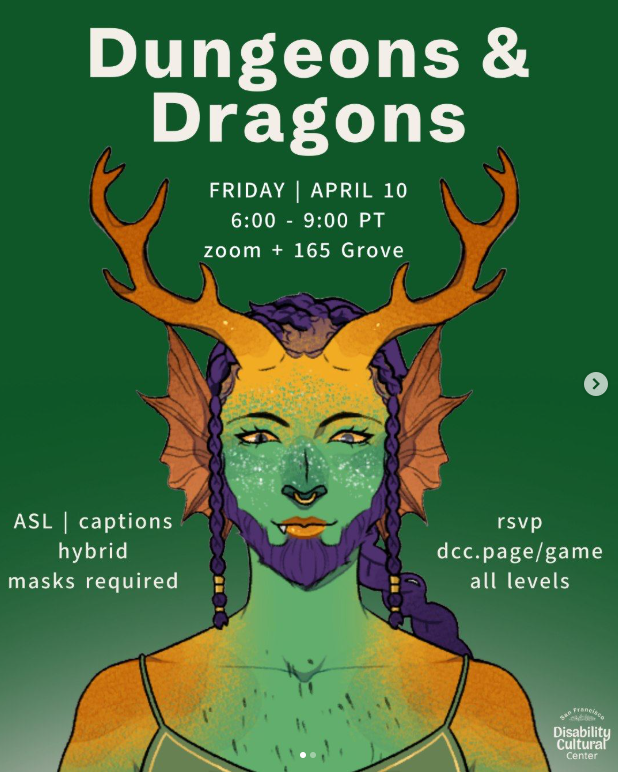
Even in our own Calling Up Justice organization we have engaged with DND to honor and tailor it towards disability joy and representation. In spring of 2026, the San Francisco Disability Cultural Center (DCC) hosted an accessible and disability centered DND game, with virtual and in person options. Claudia served as a digital Dungeon Master and advisor to the center, and many of our members as players, supporters, and audience members. The event was led by Emily Beitiks, and Dr. Vivian Delchamps Wolf supported readability and ease of play of a modified short adventure called Horror of the Shade, which was written by Theo Kogod and adapted for the DCC by Azaleah Goose. They offered disability focused content, and also accessible ways to engage as players and audience members, such as engaging with the live feed chat, being able to pop into the story as NPCs, and engaging with the excited energy in the physical and virtual space. While this event has only happened once so far, those who participated are hoping to make it a recurring event and continue sharing in TTRPG disability community in the future.
So why is this so important?
When we don’t see ourselves reflected in our media, our games, or our worlds, it takes a toll and sends a message about who belongs and who is allowed. And when the versions you finally do see are lack luster, incorrect, or underestimate you, those issues aren’t fixed. When we get the chance to authentically represent ourselves and see others do the same, it frees a piece in all of us. Getting to see our disabilities represented in numbers that also show how we’ve adapted, how we’ve built our skills and support systems to be good at what we do, that helps push back the constant discrimination we face. When our whole table shares in the uplifting of our identities, we get to go beyond explaining why we deserve to be there, and we get to actually do what we came here to do. In this case, that is to explore worlds where we aren’t always facing racism, homophobia, and ableism, and imagining what kind of world we can make together. By making spaces where it is easy to be us, we are making spaces where it is easy to dream of something brighter.
References and Influences
- https://www.scribd.com/document/637071764/Untitled
- https://cripplemedia.com/accessible-adventures-in-ttrpgs-with-sara-thompson/
- https://criticalrole.fandom.com/wiki/Dagen_Underthorn
- https://www.reddit.com/r/HeroForgeMinis/comments/rm089x/excited_to_see_that_crutches_and_prosthetic_legs/
- https://dnd5e.wikidot.com/lineage:half-orc-phb
- https://jamesmendezhodes.com/blog/2019/1/13/orcs-britons-and-the-martial-race-myth-part-i-a-species-built-for-racial-terror
- https://jamesmendezhodes.com/blog/2019/6/30/orcs-britons-and-the-martial-race-myth-part-ii-theyre-not-human
- https://disabledcharacters.fandom.com/wiki/Lydia_Barkrock
- https://www.reddit.com/r/DnD/comments/uxfdkx/contest_design_a_disabled_dd_character_to_be/
- https://www.instagram.com/cripquest/
- https://callingupjustice.com/dd-night-at-the-san-francisco-disability-culture-center/