From Knoxville Burlesque to TikTok: How the ‘Prohibition Show’ Inspired Me to Dive Into Josephine Baker and the Frontlines of the Baby Boo Controversy
Last month, I attended my first-ever burlesque show in Knoxville, Tennessee, and I had no idea how deeply it would stir something in me.
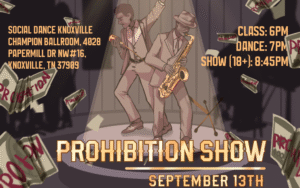
Until then, my only real exposure to burlesque was the glitzy, Moulin Rouge-style depictions in film. Showgirls on grand red stages in Paris, dripping in rhinestones and feathers as men made animalistic noises and gestures. So when I discovered that a local ballroom studio in Appalachia was hosting a burlesque show called The Prohibition Show, I was both intrigued and slightly confused. It was part of a burlesque “weekender” organized by Emily Estes, the lead instructor of Social Dance Knoxville. Called Emily’s Jazz Age Burlesque Weekender, it was a weekend of classes in cabaret art forms that culminated with a professional showcase. Though I couldn’t take the classes, I decided to attend the showcase, and what I found there was nothing like what I expected.
The moment I stepped into the transformed studio, I was struck by the intimacy and sparkle of the space. The one-room practice space had been divided into sections: a stage set against a wall of mirrors, a backstage hidden behind black dividers, a seating area for the audience, and a small vendor bazaar selling rhinestones, fans, zines, and costume gems.
A beautifully bald emcee dressed in a sleek black suit (@masterclassburlesque), welcomed us with flair, setting the tone for the evening. He explained that due to Tennessee’s blue laws and anti-adult cabaret restrictions, the 18+ show was a sober, private, camera-free performance. Though quite different from the free-spirited Parisian atmosphere I had always associated with burlesque, I set that bias aside as the first performer of the night took the stage.
Sailor Ignite (@sailorignite), emerged like a vision in red, her sparkly ensemble glittering in time as she moved with elegance and intention. Locs flipping and cascading like ocean waves as she bent and arched her way across the stage and down the center. Sailor was one of the many visiting with an all-Black performance collective from Nashville called Back to Black. Watching her, I realized burlesque wasn’t the elite debauchery I had seen in movies. Burlesque was a journey of awe, patience, and joy. As she finished her performance with the reveal of her tassels, I realized nudity wasn’t the main point of burlesque. It was an ingredient to be played with. And with that, I was hooked.
“Burlesque doesn’t have to be sexy,” our emcee said.
And with each following performance, I found that to be true. Some performances were kinetic spectacles, like Danger Angel “with the al dente booty” (@dangerangel865) who ripped open his shirt with sheer strength and swung himself on a pole, and Christian Fale (@christianfale_dances) who balanced herself in sculptural poses on a chair, sometimes almost upside down.
Some performers brought cultural elements to their acts as well. One performer, Betty Vou Plait (@vouplait) danced in traditional kente cloth, seamlessly binding African heritage, spirituality, and sensuality together. Another act named Belle Witch (@bellewitch.creatix) pretended to sip moonshine as a Southern belle with fiery red hair and a love for the hills. Another performer used her act as a rallying call for LGBTQIA+ rights as Charlie Chappalachian (@charliechappalachian). A jolly and boisterous drag king who performed alongside silent-movie style cue cards that paid homage to queer pride and resilience. Even the emcee joined an act at one point, donning feathers and performing with a Rockette-worthy lineup of dancers alongside the voluptuous Sadie Sincere (@sadiesincere) in a piece that was reminiscent of old-hollywood glam.
Then came the final act, Nami Flair (@nami.flare). Nami is an award-winning and decorated burlesque dancer who entered the stage with jazz stylings, glitter, and Black ancestral pride. Introduced as continuing the legacy of black burlesque performers before her, she appeared in a sparkly two-piece and vintage jazz cap invoking the energy of Florence Mills. Hips rolling, body flowing, and booty twerking, she moved around the room like it was her sandbox. Doing a backwalkover in the crowd and running around on all fours, she was frankly just fun to watch. Her piece was bursting with joy, sensuality, and playfulness, showing me that what makes burlesque so special is how it lets people just move every part of their bodies freely. To see her representing Black artistry, it got me thinking– What does burlesque mean to me as a Black fem dancer? Nami’s performance inspired me to research a Black burlesque dancer I had recently discovered at the Resistance Museum during my dance trip to Amsterdam. The exhibit was all about Josephine Baker.
Josephine Baker, often celebrated now as a glamorous icon, I had learned was once terribly vilified for her cabaret performance in the 1926 show La Folie du Jour. To be known as the “banana skirt” dance, she wore a two-piece costume that had a skirt made of rubber bananas as she performed African-based movements. She was an athletic and expert dancer but her performance was interpreted by many as vulgar and shameful and saw her even physically kicked out of places. Her artistry was reduced to savagery and scandal but as Alicja Sowinska shares in her paper titled Dialectics of the Banana Skirt: The Ambiguities of Josephine Baker’s Self-Representation, Josephine was “…consciously creating contradictions, ambiguities, and unsettling discrepancies that resisted one-dimensional readings and transgressed her social containment.” Josephine did not hide from the limelight, she embraced it to transform the negative attention into conversation and opportunity. She did not shy away from her body or the performance of perceived ‘sensual’ movements. She instead opened doors for those after her and proved that her ancestry and body one of muse and celebration.
Ironically days later after doing this Josephine deep dive, I found myself watching a modern ‘banana skirt’ controversy unfold online.
A viral dance trend called the “Baby Boo” challenge featuring mostly Black women twerking to NBA YoungBoy had taken over TikTok. But instead of admiration for their dancing, people began shaming their actions and choice of clothing. Words like “dirty,” “disgusting,” and “unclean” flooded the comment sections of black girls’ videos. Was this a repeat of history? Has the sexualized policing of Black women’s bodies just moved from audience jeers in packed theatres to comment sections in viral videos? At that moment, I saw the exact same cultural script that Josephine and others had faced nearly a century ago. Black women’s bodies labeled as sin. It seemed the Prohibition Show must continue.
Inspired by the performers that graced the stage of Emily’s School of Burlesque, I decided to create my own short act. As a former gogo dancer, sensual performance is not new to me. But this time, I infused it with intentionality and resistance. I revisited my Mr. Compress cosplay. A character from the anime, My Hero Academia (MHA), he is a villain known for his mysterious mask, showmanship, and magic tricks. Cherished by the MHA fandom as ‘sexy man’, he is not only loved for his handsome clothes and poses but also for his humble backstory. Real name Atsuhiro Sako, he is the descendant of the legendary ‘Peerless Thief’ who stole from corrupt heroes and gave to the poor. Atsuhiro became a ‘villain’ to honor his ancestor’s fight against injustice and pushback against the hypocrisy of ‘hero society’.
And like him, I, too, was channeling my ancestors, artists who were called indecent, primitive, or worse. For my act, I swapped the character’s usual slacks for a pair of my favorite “twerking shorts” and embodied the villain who stands for the peerless twerker. In my caption, I call for more adult artists and entertainment content as well as giving my support to one of the most talented twerkers receiving backlash, @PunkinNicole_, I too became the ‘dirty villain’ in the Baby Boo trend. Performing my version of digital burlesque, I felt the same spirit I saw on stage at the Prohibition Show. From the stages of Knoxville to the digital feeds of TikTok, from Baker’s banana skirt to the Baby Boo challenge, the same fight continues: the right to move our bodies without shame.