Digital Placemaking, Placekeeping, and the Work of Belonging
Calling Up Justice as a Hybrid Practice
Creative placemaking is often described as the process of shaping physical, social, and cultural environments through arts and community-centered practices. At its best, creative placemaking does more than beautify space or attract attention—it cultivates belonging, memory, and collective power. Closely related is placekeeping, which focuses on sustaining, protecting, and carrying forward the cultural, political, and historical meanings of a place over time, particularly in the face of erasure, displacement, or commodification.
Calling Up Justice practices both placemaking and placekeeping, across in-person, digital, and hybrid environments. Our work insists that place is not only geographic—it is relational, archival, and lived. We create places where people who are routinely excluded from dominant civic and cultural spaces—disabled people, Black and Brown communities, queer and trans folks—can gather, create, remember, and organize. We do this online, on the streets, and in the connective tissue between them.
Creative Placemaking as Ethics, Not Aesthetic
In Placemaking and the Politics of Belonging and Dis-belonging, Roberto Bedoya asks critical questions that shape our approach:
“What are the imperatives that infuse Creative Placemaking activities? What are the visions of our humanity that are manifest in the plurality animated by Placemaking activities? Its ethics?”
Bedoya centers creative placemaking not as a neutral cultural activity, but as a political and ethical one. He reminds us that placemaking always carries an answer—implicit or explicit—to the question of who belongs and who does not. Civic vitality, he argues, depends on reckoning with power, civil rights, and access:
“Placemaking in city/neighborhood spaces enacts identity and activities that allow personal memories, cultural histories, imagination, and feelings to enliven the sense of ‘belonging’… But a political understanding of who is in and who is out is also central to civic vitality.”
Calling Up Justice takes this seriously. We understand creative placemaking as a practice rooted in disability justice, racial justice, and liberatory access—not consumption, spectacle, or real-estate logic. Our work is not about making spaces attractive to funders or institutions; it is about making spaces livable, survivable, and sustaining for the people who already hold the culture.
In-Person Placemaking: Grounded, Local, Relational
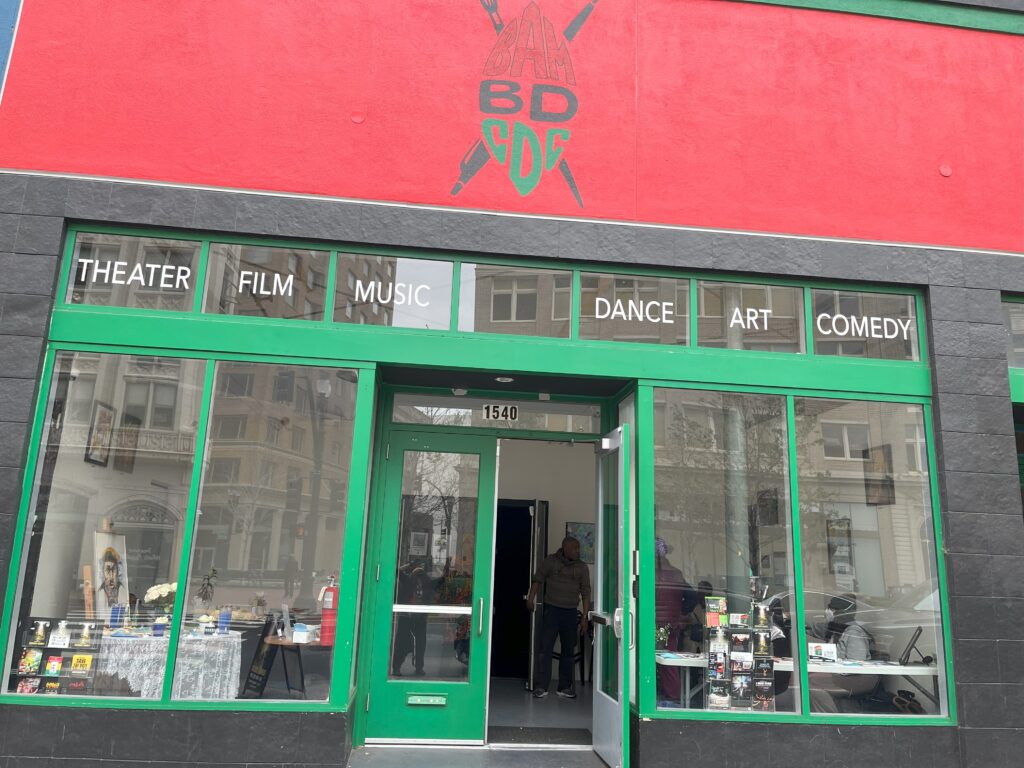
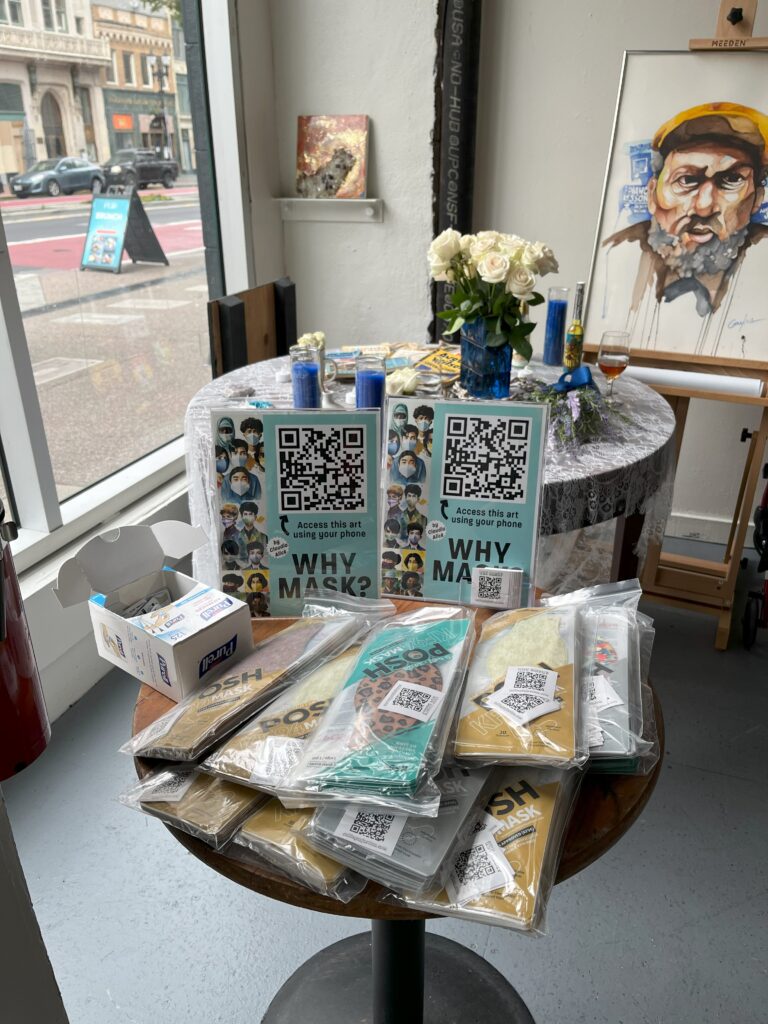
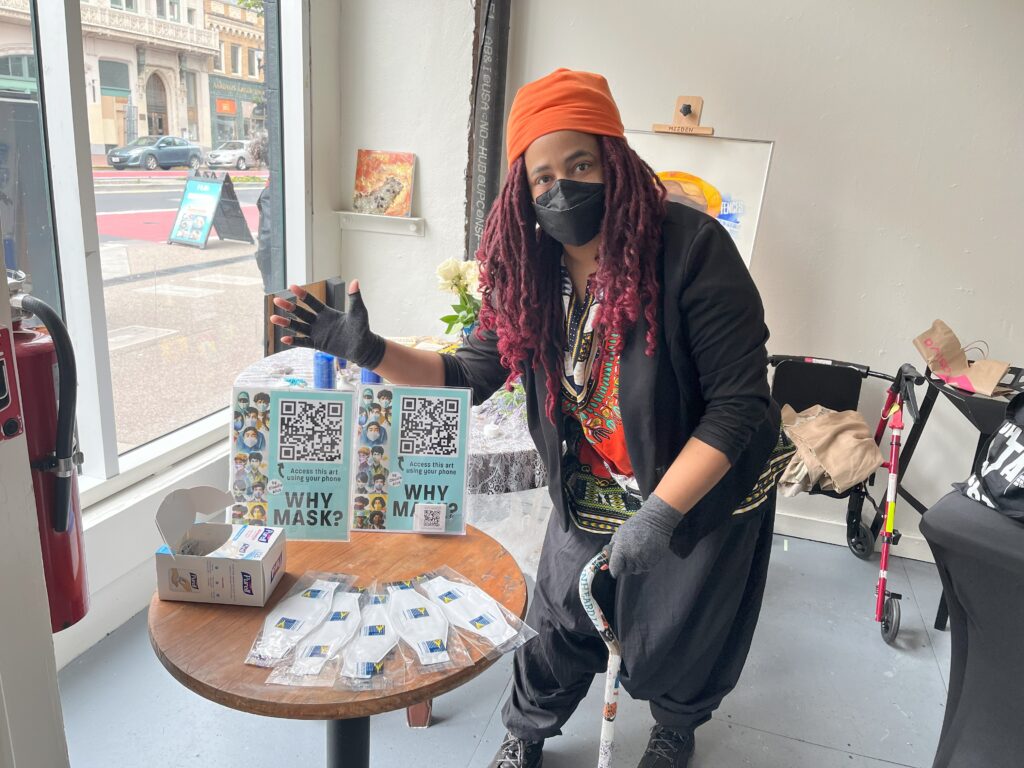
Calling Up Justice engages in in-person creative placemaking by supporting and strengthening community-rooted cultural spaces. This includes supporting programming at BAM House in the Black Arts Movement Business District—spaces that carry deep histories of Black artistic, political, and civic life. Our role is not to overwrite these places, but to amplify, resource, and connect them.
This is placekeeping as much as placemaking. We help hold space for ongoing cultural production while respecting lineage, authorship, and local leadership. The work is about continuity—ensuring that culture remains alive, accessible, and self-determined, rather than extracted or displaced.
Digital Placemaking: Building Belonging Without Geography
Calling Up Justice has also practiced creative placemaking as a purely digital practice for over five years. CripCreate, our twice-weekly Zoom-based co-working and social space, is a powerful example. It is not a webinar, content stream, or productivity tool—it is a place. People arrive as themselves, with fluctuating capacity, care needs, and creative goals. Relationships form. Rituals develop. Culture accumulates.
Similarly, One Free Community on Discord functions as a persistent digital commons—an always-there gathering space for connection, resource sharing, and mutual aid. These spaces prove that place does not require physical proximity. For disabled communities in particular—who are often excluded from in-person cultural life due to access barriers—digital placemaking is not a substitute. It is primary civic infrastructure.

Hybrid Digital Placemaking: Where the Work Comes Alive
The most dynamic and generative work of Calling Up Justice lives in hybrid digital placemaking—where physical space, digital design, and community memory converge.
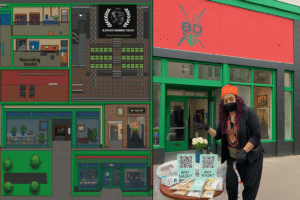
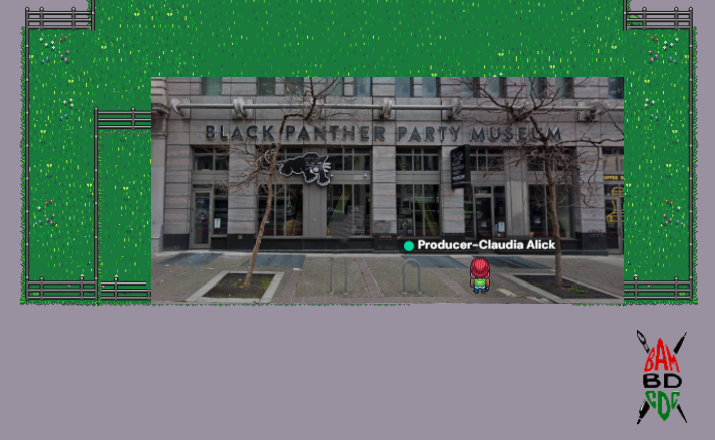
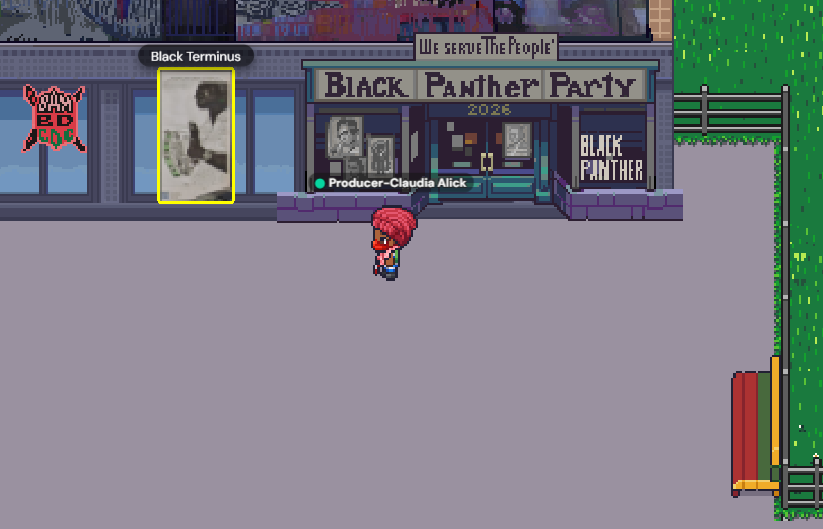
Through pixel art environments, GatherTown-style platforms, livestreams, and archives, we recreate physical space digitally and intentionally link it to real people, real movements, and real-world programming. These are not simulations for novelty’s sake. They are bridges.
Our Digital Encampment, for example, reflects student movements and resistance organizing. It contains links to ideas, historical context, political demands, and creative responses—functioning as both gathering space and archive. Similarly, the Digital Black Arts Movement District preserved and extended the life of a festival by housing its programming, aesthetics, and conversations in a navigable digital neighborhood.
This is where placemaking and placekeeping become inseparable. These spaces are:
- Archival, holding memory against erasure
- Living, allowing people to return, revisit, and build
- Political, grounding culture in resistance and belonging
Placekeeping as Resistance
Bedoya writes that the task of creative placemaking must be grounded in authenticity—an authenticity rooted in belonging:
“The authenticity I am invoking is grounded in the ethos of belonging… how to help the citizens of a place achieve strength and prosperity through equity and civility.”
Calling Up Justice practices placekeeping by refusing to let culture disappear when an event ends, funding cycles close, or bodies cannot gather in person. We keep places alive across time, access needs, and political shifts. We treat digital space not as disposable, but as infrastructure—a place where movements can rest, learn, and continue.
Creating Spaces of Belonging, Everywhere
Ultimately, Calling Up Justice is engaged in the work Bedoya calls for: foregrounding belonging as the core ethic of creative placemaking. We create spaces of belonging for disabled people, BIPOC communities, and LGBTQ+ folks—online, on the streets, and in the connective spaces between. We understand place as something made together, held with care, and defended with intention.
Creative placemaking, for us, is not about where people are invited to go.
It is about who is finally allowed to stay, to shape, and to belong.