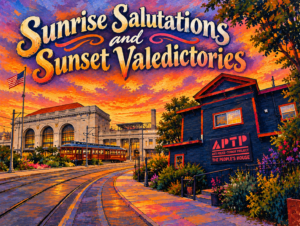
Sunrise Salutations and Sunset Valedictories: Art, Memory, and Digital Placemaking in Oakland
A site-specific ritual performance and transmedia art project
September 26–27 and October 3–4, 2026 | Oakland, California
Sunrise Salutations and Sunset Valedictories brought together Oakland artists, cultural organizations, and community members for four site-specific ritual performances exploring the city’s people, places, memories, migrations, losses, transformations, and futures. Presented at the historic 16th Street Station and The People’s House, the project combined visual art, poetry, storytelling, dance, music, collective healing, and digital placemaking to create spaces for remembrance, reflection, and community connection. This project was funded by the Rainin Foundation Open Spaces Grant.
Produced through a collaboration led by the Black Arts Movement Business District Community Development Corporation (BAMBD, CDC) and Lower Bottom Playaz, the project invited participants to consider what it means to belong to a place, to witness its transformations, and to remember the people and histories that shape it. Calling Up Justice contributed a transmedia approach that expanded the performances beyond their physical locations through livestreaming, community storytelling, digital documentation, printed art, and augmented reality.
From Community Stories to Public Art
The project grew from BAMBD’s vision of temporary public rituals that could help communities process displacement, celebrate belonging, and preserve collective memory. The original grant proposal envisioned gatherings across Oakland’s Black Arts Movement District, with community members contributing to artistic creation, public signage, and the development of shared rituals.
The realized project took place across two sites and four performances, with additional digital and augmented reality elements expanding the original concept. This evolution reflected a central idea of the project: the community itself helps shape the artwork, and artistic creation continues before, during, and after the live gathering.
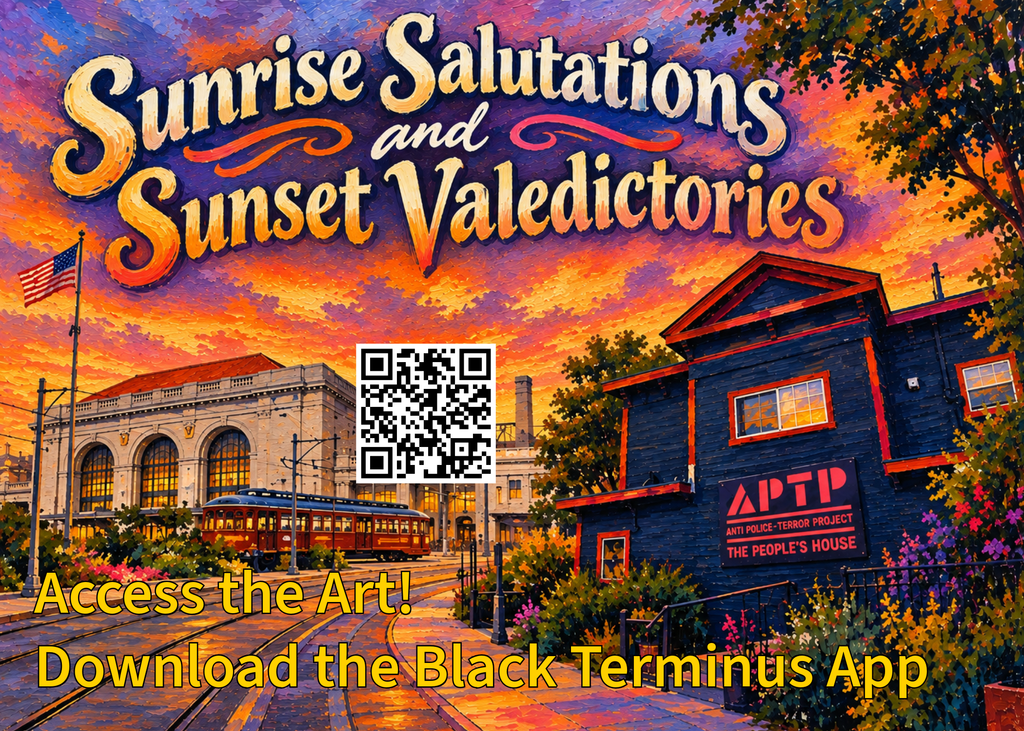
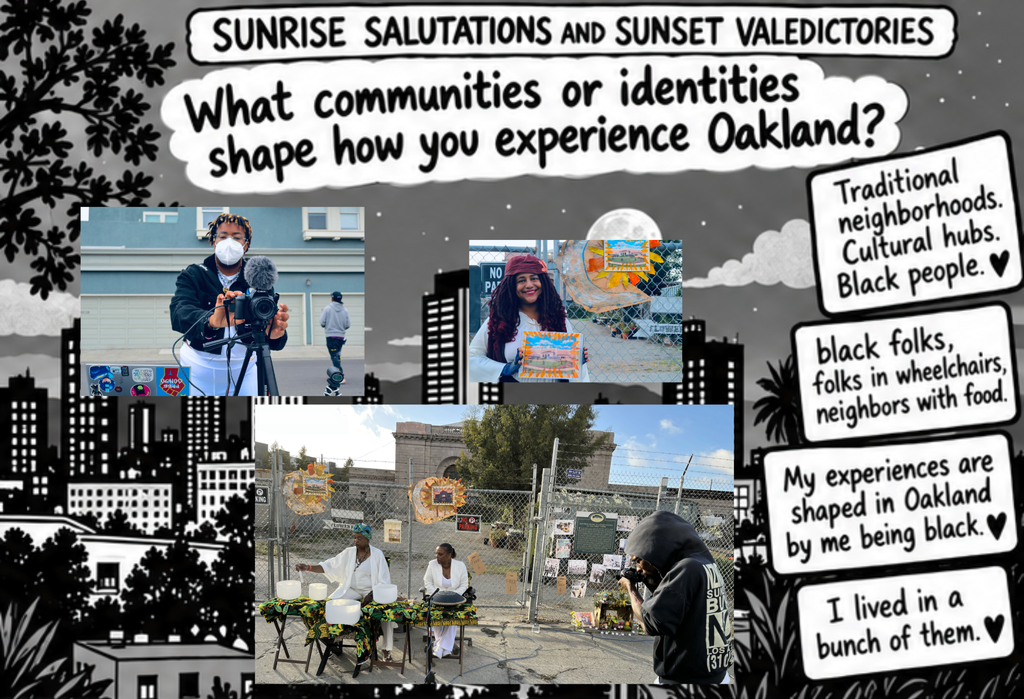
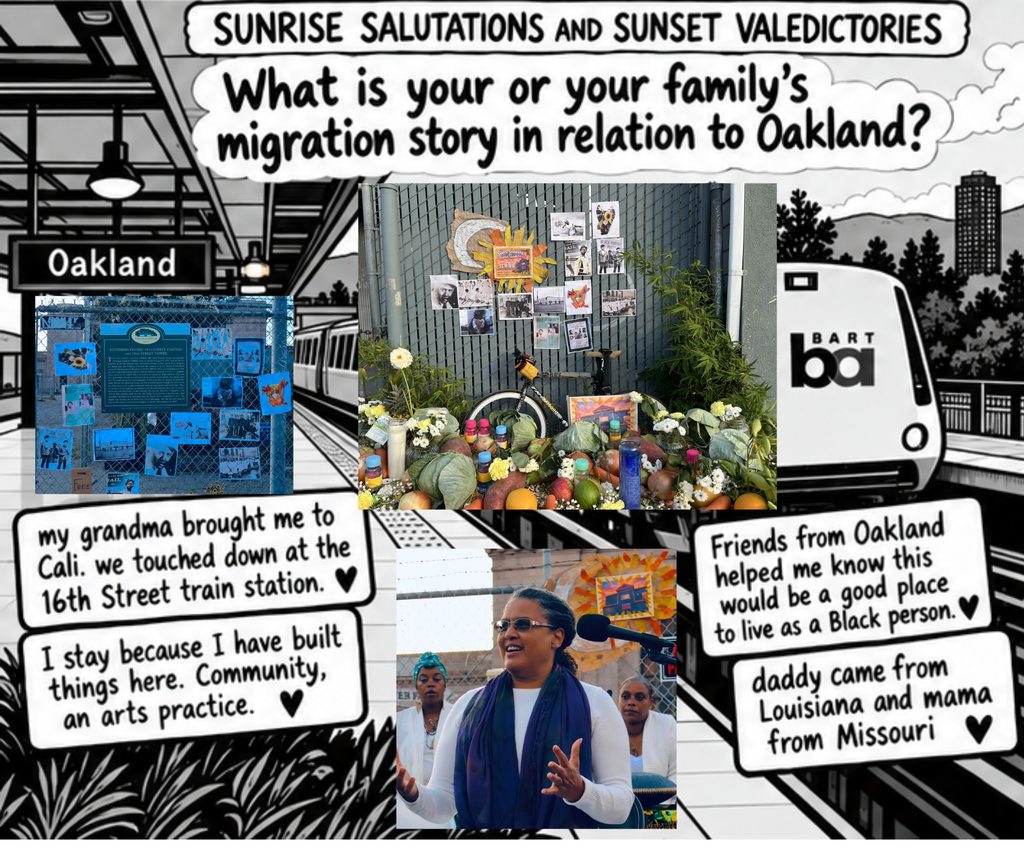
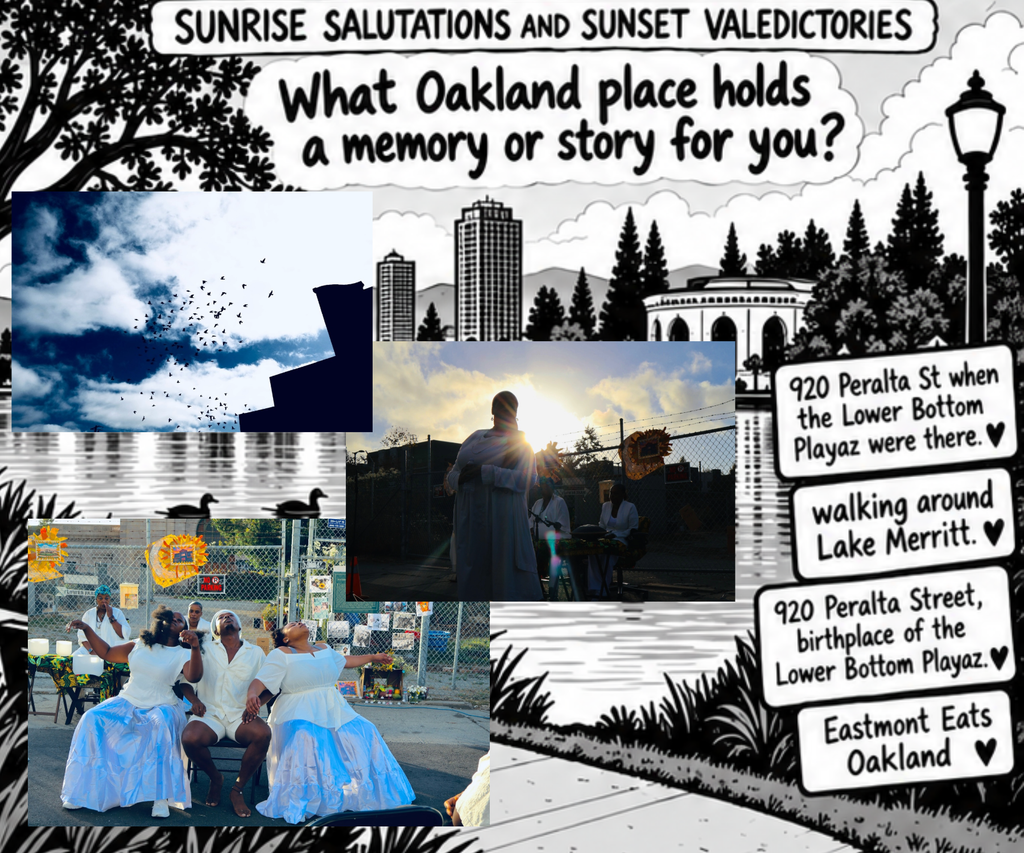
Our digital placemaking process began with an interactive poster featuring a QR code that invited people to share their experiences of Oakland. The accompanying survey gathered personal stories, neighborhood memories, reflections on migration and displacement, and visions for the city’s future. These contributions helped inform the artistic offerings that followed.
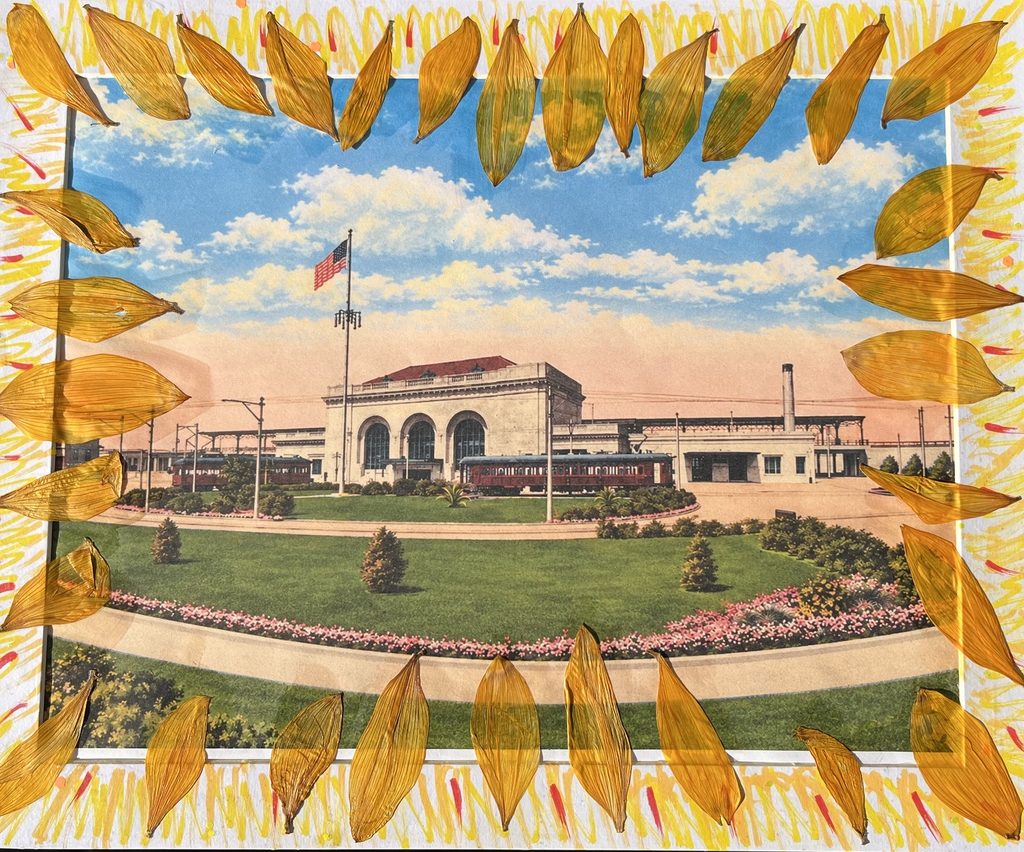
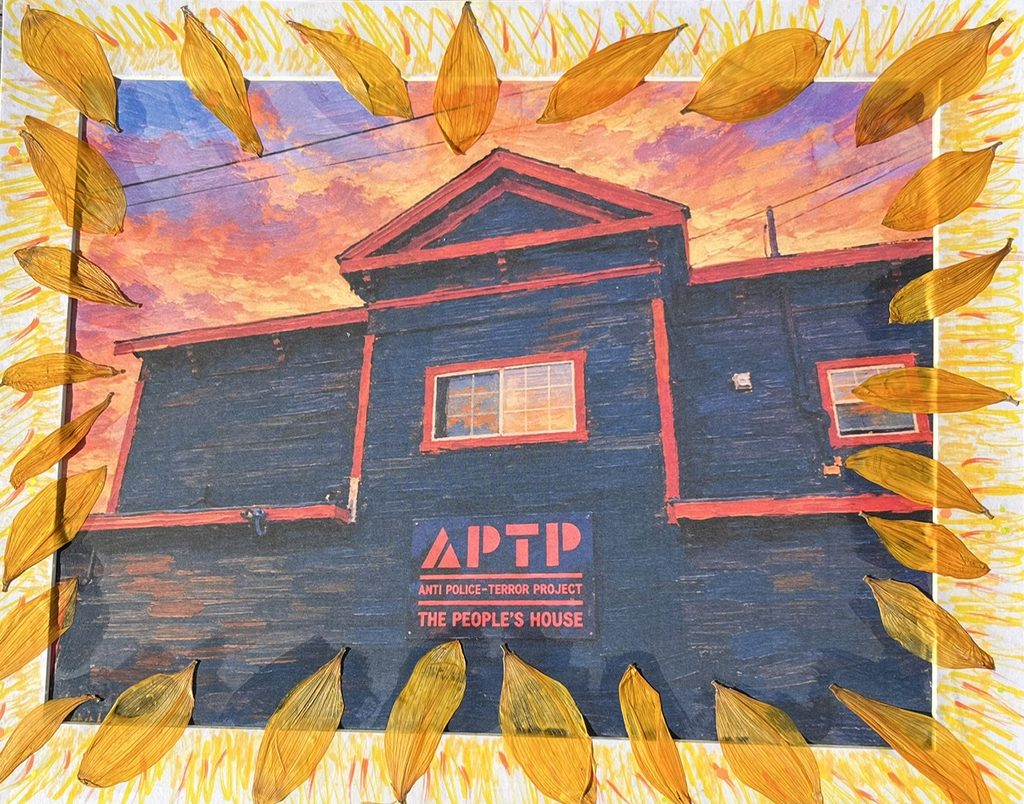
Claudia Alick created large-scale visual artworks combining paint, sunflower petals, glitter, and digital design. The finished pieces were installed at the 16th Street Station and The People’s House, transforming each location into an artistic environment for the rituals. The installations connected physical materials and digital imagery with the histories and emotional significance of these Oakland spaces.
Rather than treating the city as a backdrop, the project approached Oakland itself as a living archive of relationships, struggles, celebrations, and memories.
Four Ritual Performances Across Two Oakland Sites
The four performances unfolded over two weekends, with sunrise gatherings on Saturdays and sunset gatherings on Sundays.
- September 26–27: 16th Street Station
- October 3–4: The People’s House, 893 Willow Street
Each gathering offered a combination of artistic performance, embodied participation, community storytelling, and collective care. Sound bowls, drumming, dance, poetry, massage, visual art, and offering tables created a rich sensory environment that welcomed multiple forms of participation.
Poetry and storytelling from Ayodele Nzinga and Cat Brooks were woven together with community testimonials about personal histories with Oakland. Participants shared memories of people, neighborhoods, displacement, transformation, and belonging. These stories offered a collective portrait of a city experienced differently across generations and communities.
Several artistic moments invited participants to honor people they had lost, acknowledge personal and collective trauma, engage with grief, and practice releasing it. Through ritual, stillness, sound, movement, and shared reflection, the performances created opportunities to hold difficult histories together while imagining possibilities for healing.
Dance and movement were important elements of the gatherings. One movement workshop explored back pain as a social justice issue, connecting our physical experiences of pain with broader questions of labor, stress, care, and community well-being. This offering expanded the project’s understanding of placemaking to include the body itself as a site where social conditions and personal histories are experienced.
Offering tables, massage, art decoration, and opportunities for collective participation created multiple entry points into the work. Some people joined through movement or storytelling, while others participated through listening, reflection, creating art, or receiving care.
The performances made space for both celebration and sorrow, recognizing that community wellness requires opportunities to remember, grieve, move, rest, and experience joy together.
A Collaborative Ensemble of Artists and Community Organizations
Sunrise Salutations and Sunset Valedictories was made possible through a vibrant collaboration of Oakland artists, cultural organizations, community organizers, technicians, and volunteers. Lower Bottom Playaz, led by ayodele nzinga, provided artistic leadership and performance production. The Anti Police-Terror Project, with lead artist Cat Brooks, contributed community engagement, healing practitioners, and rituals for processing collective grief. EastSide Arts Alliance, represented by Elena Serrano, supported art production, outreach, and community engagement. Grown Women Dance, led by Tonya Amos, brought dance instruction and movement presentations. LPB Dance, with lead artist Jemeelah Lane, contributed choreography, participatory dance, and grief rituals. Afro Urban Society, represented by Kunukai, contributed movement and performance offerings. Calling Up Justice, led by Claudia Alick, provided digital and transmedia placemaking, livestreaming, archiving, augmented reality, and remote access for disabled audiences. BAMBD, CDC supported project administration, coordination, logistics, and BAM House as a creative and organizing hub. Each organization brought additional performers, technicians, organizers, and volunteers who contributed their creativity and labor, including the essential work of setting up and breaking down the performance environments.
Together, this distributed ensemble demonstrated how public art can emerge from the collective resources, relationships, and artistic practices of a community.
Digital Placemaking: Extending the Ritual Beyond the Site
Digital placemaking was central to Calling Up Justice’s participation in the project. Rather than using technology only to promote or document performances, we approached digital tools as creative spaces for participation, memory, accessibility, and artistic exchange.
With technical support from Distributed Sound Collective, Calling Up Justice livestreamed the performances so that people who could not physically attend could witness the rituals in real time. This was particularly important for disabled community members and others who experience barriers to participating in public gatherings.
The performances were also documented by multiple videographers, photographers, and audience members using their own cameras and phones. This created a distributed collection of images and recordings from different perspectives. The community was not simply the subject of documentation; participants also contributed to creating the record of what happened.
The documentation became a resource for further artistic development, generating new materials that could circulate beyond the original performances. Through this approach, the physical sites became connected to digital spaces where the events could be revisited, interpreted, and shared.
From QR-Code Postcards to Augmented Reality Zines
During the two weeks of performances, Claudia Alick continued developing new forms of artistic participation and distribution.
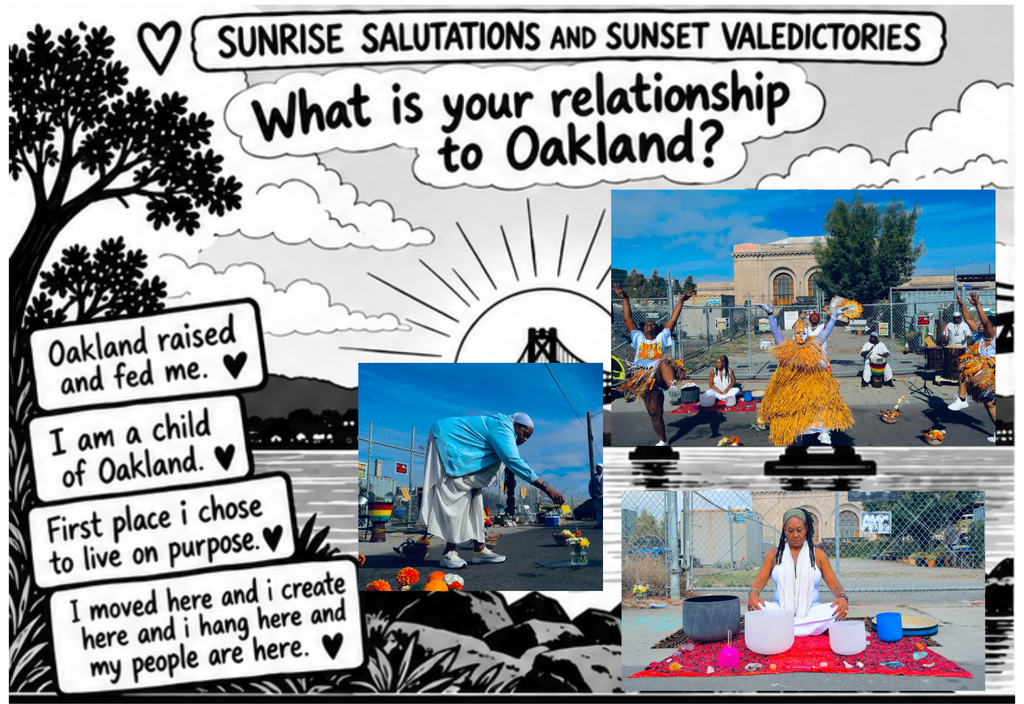
The first experiment was a postcard featuring QR codes that connected physical printed materials to digital content. This was followed by a black-and-white photocopied zine featuring collages made from photographs and drawings of iconic Oakland locations.
Using the Black Terminus augmented reality platform, each image in the zine became a portal to a different video experience. By viewing the printed artwork through the AR technology, audiences could activate another layer of the project, connecting the physical imagery to moving images and digital storytelling.
This process transformed an inexpensive, reproducible publication into an interactive multimedia artwork. The zine could travel with participants, be shared with others, and provide another way to experience Oakland’s places and stories.
The augmented reality work also extended the project’s artistic language. Monumental physical installations, live performances, postcards, and photocopied pages all became connected parts of a larger transmedia experience.
The project demonstrated that emerging technology does not have to exist separately from handmade art or accessible, low-cost publishing. Paint, flower petals, glitter, paper, photocopies, QR codes, and augmented reality could all participate in the same creative ecosystem.
Temporary Public Art, Lasting Community Memory
One of the original ideas behind Sunrise Salutations and Sunset Valedictories was that temporary public art could generate relationships, conversations, and memories that endure beyond the installation itself.
The performances took place at particular moments in time, shaped by the light of sunrise and sunset, the people gathered, and the histories of the locations. The installations were temporary, and each gathering was unrepeatable.
Digital placemaking offered another relationship to that impermanence.
The livestreams, photographs, videos, postcards, and augmented reality zines created ways for the artwork to continue circulating after the physical gatherings ended. The ritual could be remembered through an image, revisited through a video, or encountered in a new context through a printed publication.
Community stories informed public art. Public performances generated digital documentation. Documentation became material for new collages and augmented reality experiences. Printed objects became portals back into digital space.
Each artistic offering generated material for the next, creating an evolving cycle of community participation, artistic production, documentation, and redistribution.
This approach also challenges traditional understandings of where public art exists. The artwork was present in the physical gathering, in the relationships among participants, in the memories shared, in the digital archive, and in the portable publications that continued to travel.
Continuing the Work Into 2027
Calling Up Justice is completing two final archival videos edited by Maiamama and Jasper Love. These films will contribute to the project’s growing digital archive, preserving and interpreting the performances for audiences who attended, participated remotely, or encountered the project afterward.
Dr. Ayodele Nzinga poke about how Sunrise Salutations and Sunset Valedictories will continue developing into 2027, with opportunities for additional artistic offerings, digital experiences, community participation, and new interpretations of Oakland’s evolving stories.
For Calling Up Justice, this project demonstrates how digital placemaking can connect physical gathering, embodied experience, public art, community memory, and emerging technology. It offers a model of artistic production in which access and distribution are part of the creative process, rather than activities that happen after the art is complete.
The project began by asking people to share their memories and experiences of Oakland. Through performances, visual artworks, ritual, documentation, and augmented reality, those stories became part of a larger collective expression.
The physical performances have ended, but the artwork continues to live through the people, memories, images, and relationships it brought together.
Sunrise Salutations & Sunset Valedictories Archive
September 26 & 27 and October 3 & 4, 2026
9/26 Sunrise 10-11 and 9/27 Sunset 6-7pm 16th Street Train Station OAKLAND9/26 Sunrise 10-11 and 9/27 Sunset 6-7pm The People House 893 Willow Street OAKLAND
Livestream 9/27 6pm
Livestream 9/28
Livestream 10/3
Livestream 10/4
QR Code Poster and Postcard Image
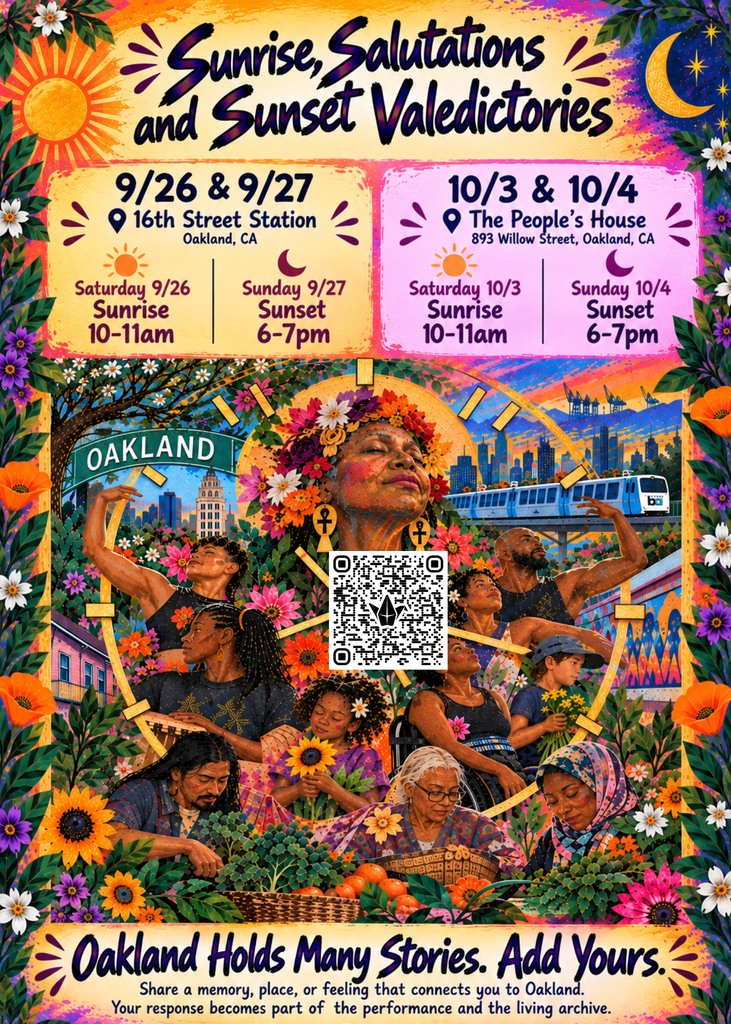
Sunrise Salutations & Sunset Valedictories is a series of site-specific performances reflecting on Oakland—its people, places, memories, migrations, losses, transformations, and futures. Across Oakland locations, artists will create performances and installations using music, movement, poetry, meditation, sound, augmented reality, and physical and digital artifacts.
Oakland Holds Many Stories. Add Yours.
Your story is part of the performance. Share your relationship to Oakland—its places, people, memories, changes, and communities. Your responses will help create a living archive of the many ways Oakland is experienced, remembered, and imagined. These responses will inform the performances. Click on the Image below and add your voice now to inform the production. Come to the performance Sept 26/27 Oct 3/4 and response to the last question to become a part of the archive!
Augmented Reality Art
access this art by using Black Terminus App. Download using this QR code