From August 11th till the 14th 2026 on Lenapehoking in Philadelphia the LEAD Conference took place (Leadership Exchange in Arts and Disability.) This is an annual conference in which organizations, individuals and leaders come to talk about how to make the arts, the world and cultural spaces more accessible. This was my first year going and I really appreciate that this conference exists.
The fact that this happens and has been going for a while is a good thing. People from all over the world get to attend, connect, share and learn about accessibility. I was only able to attend 2 out of the 4 days and on the first day I went there were so many people in the space that the parking garage – that takes 10 minutes to drive out of- was full. When I arrived it was a beautiful multi-leveled space. There was a massive ballroom, an open area where food was available and below that were tables full of different organizations and businesses.
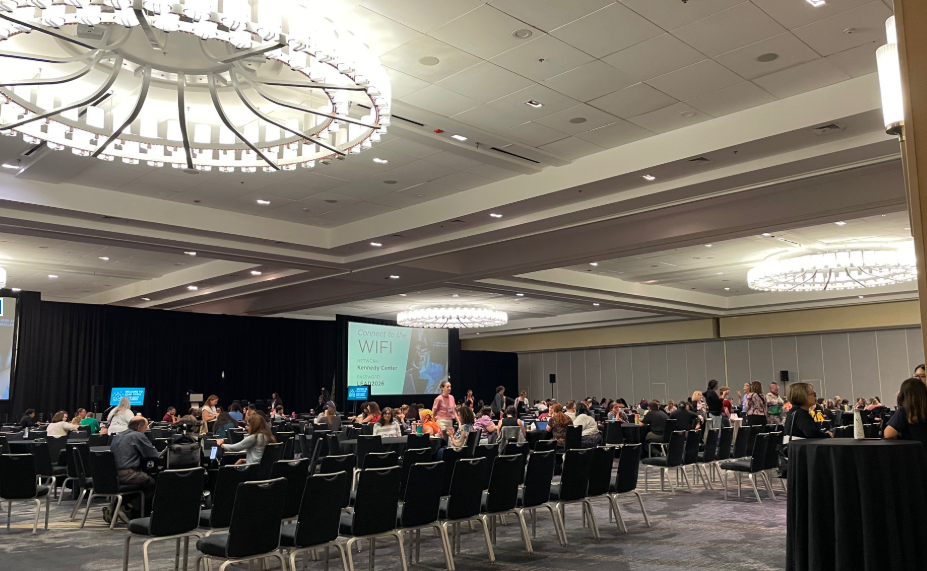
(Image Description: A large ballroom with bright chandeliers hangs above a room full of people. Many people sit on padded black chairs and in the back are projectors showing the words ‘Wifi’)
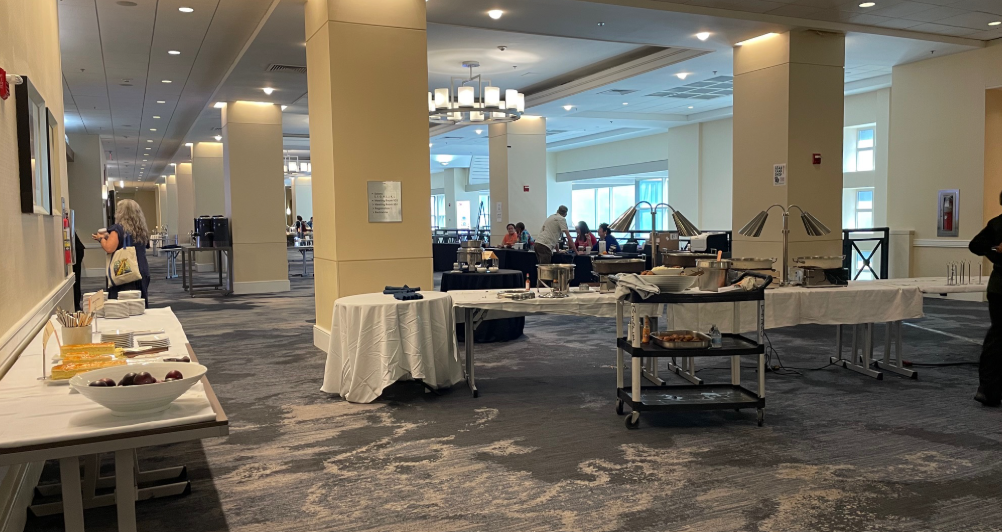
(Image Description: A large room with a black, gray and beige carpet. Tables with heat lamps and food on top of them. In the back of the room is a help desk with people sitting and standing at them. In the back of the room are large windows spilling light into the room.)
I met some wonderful people during my time there. People doing interesting and important work. Some were trying to make their work spaces more accessible for patrons and staff while others had art to share and were making more space for and with Disabled people. The workshops were informative and the organizer had a lot of intention put into the space. There were spaces to nurse your children and a quiet space. There were ASL interpreters for deaf and hard of hearing participants and each workshop I attended had live captioners. They did have small sections for people wearing masks, which was appreciated.
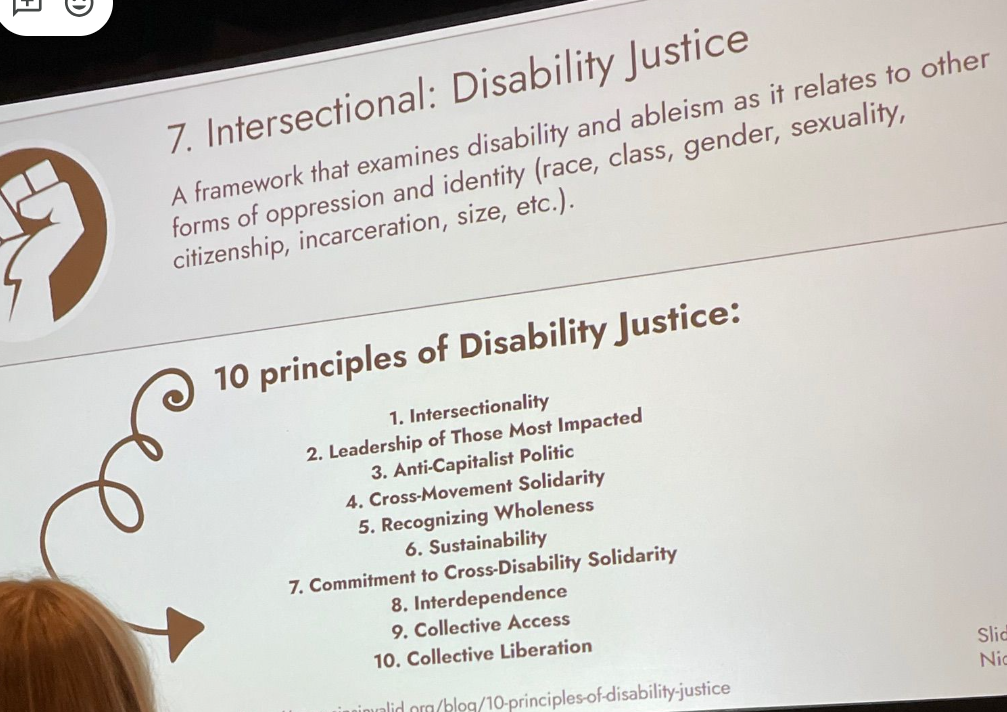
(Image Description: A slide from a presentation with the words ‘7. Intersectional: Disability Justice. A framework that examines disability and ableism as it relates to other forms of oppression and identity (race, class, gender, sexuality, citizenship, incarceration, size, ect.) Below are the 10 principles of Disability Justice as seen on the sinsinvalid website.)
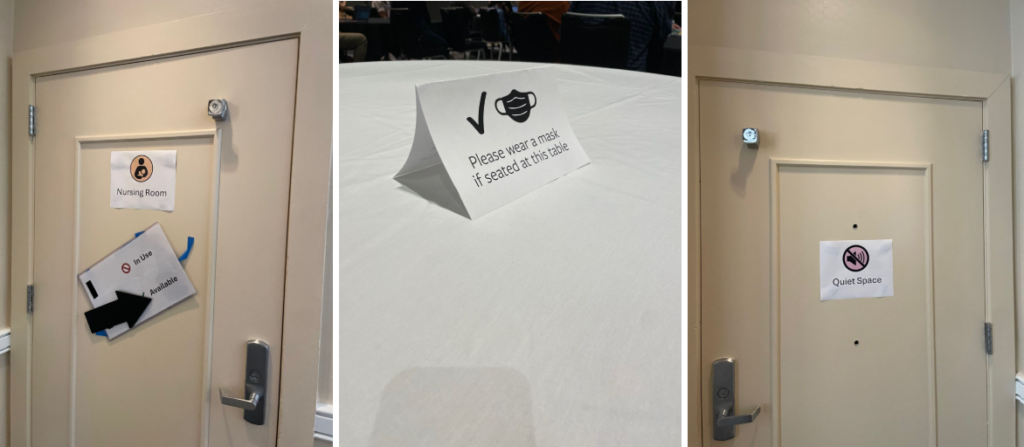
(Image Description 1: A beige door with a white sign of a cartoon person holding a baby. Underneath them says the words ‘Nursing Room.’ Below that on another sign is a velcro arrow that is pointing at the word ‘Available’ and above that are the words ‘In Use’)
(Image Description 2: A picture of a table with a white cloth over it. On top of the table is a folded paper sign that reads ‘Please wear a mask if seated at this table’ with a black check mark and a black cartoon surgical mask above it)
(Image Description 3: A picture of a closed beige door. A white sign is taped to it that reads, ‘Quiet Space’ and a cartoon drawing of a speaker with sound coming out of it with a line going through it can be seen.)
I will say that the one aspect of the conference that made me sad was how few people masked. Out of the hundreds of people I saw (Including the organizers) barely anyone was masked. While the masked sections for the workshops were appreciated, some of them were connected with unmasked sections so you would be sitting right next to an unmasked person regardless. The masked sections also tended to be in the back and away from everyone (Which for me is fine but I can see people feeling a type of way about that.) At times it was disheartening to be in a conference dedicated to disability and accessibility and feel worried for my health as the only masked person in the room. In the future I would like to see more masks and potentially hybrid options so people can access this knowledge, space and community virtually. Overall I enjoyed my time at the LEAD conference and got to meet some wonderful collaborators in person and meet some great people.
Thank you for reading!
-Ry